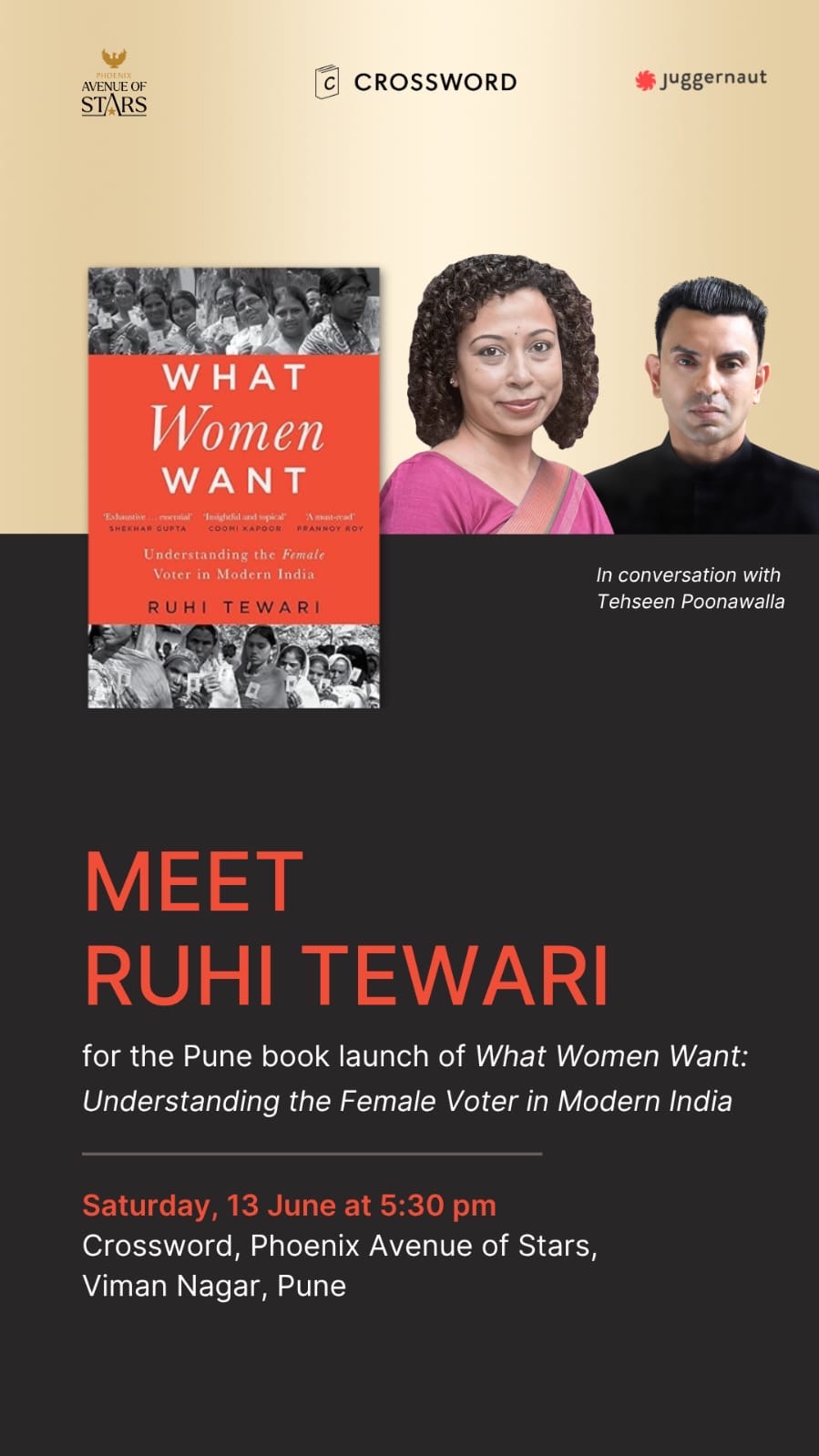

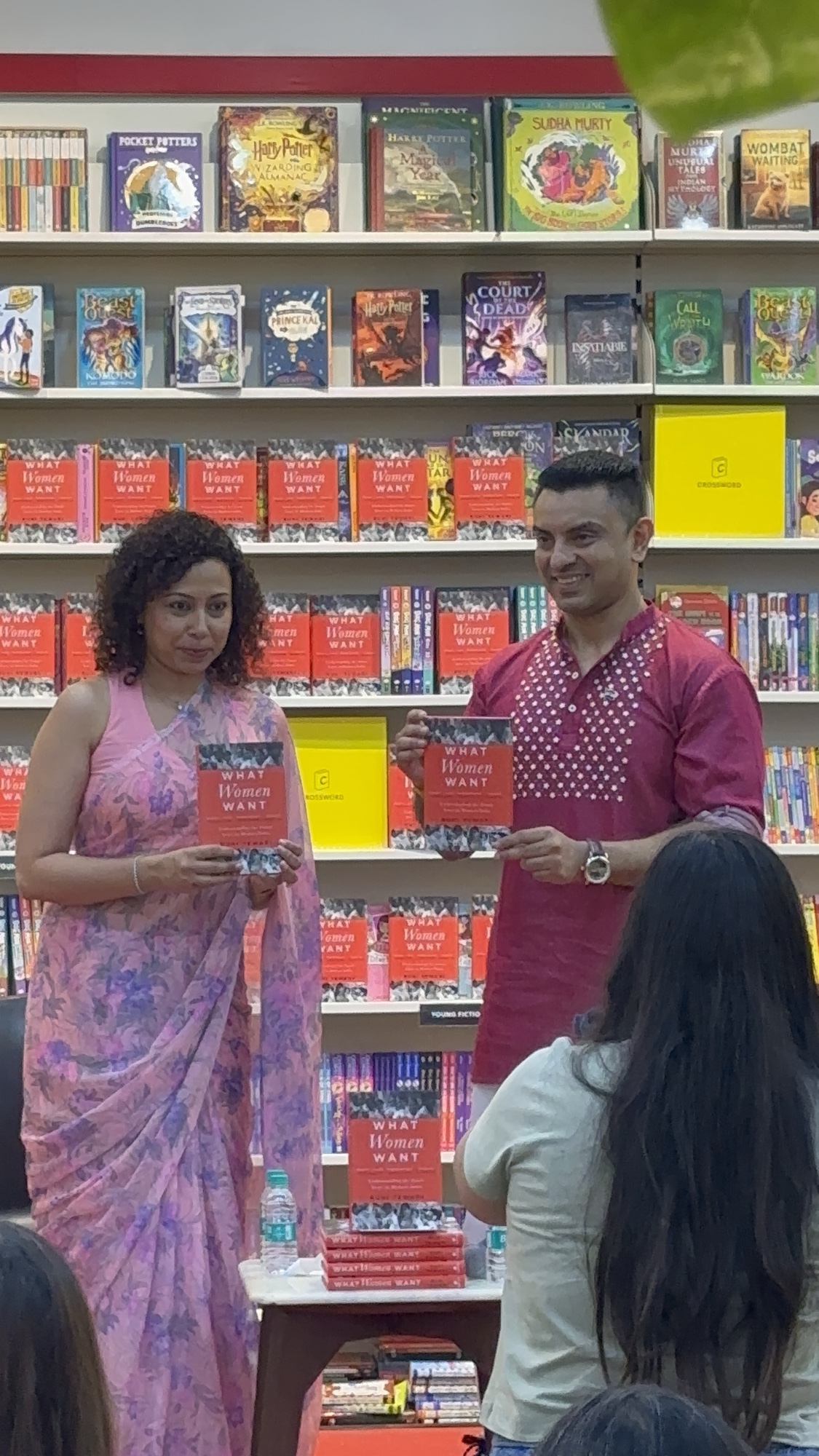
PUNE: The dynamic of Indian democracy is undergoing a massive shift, driven by a rapidly evolving female electorate. To dissect this political paradigm, prominent author and journalist Ruhi Tewari officially unveiled her new book, “What Women Want: Voting Patterns, Aspirations and the Indian Woman,” at a high-profile launch event in the city.
The event served as a platform for a fierce discussion on gender representation, systemic political barriers, and why the future of Indian governance hinges on the active participation of women.
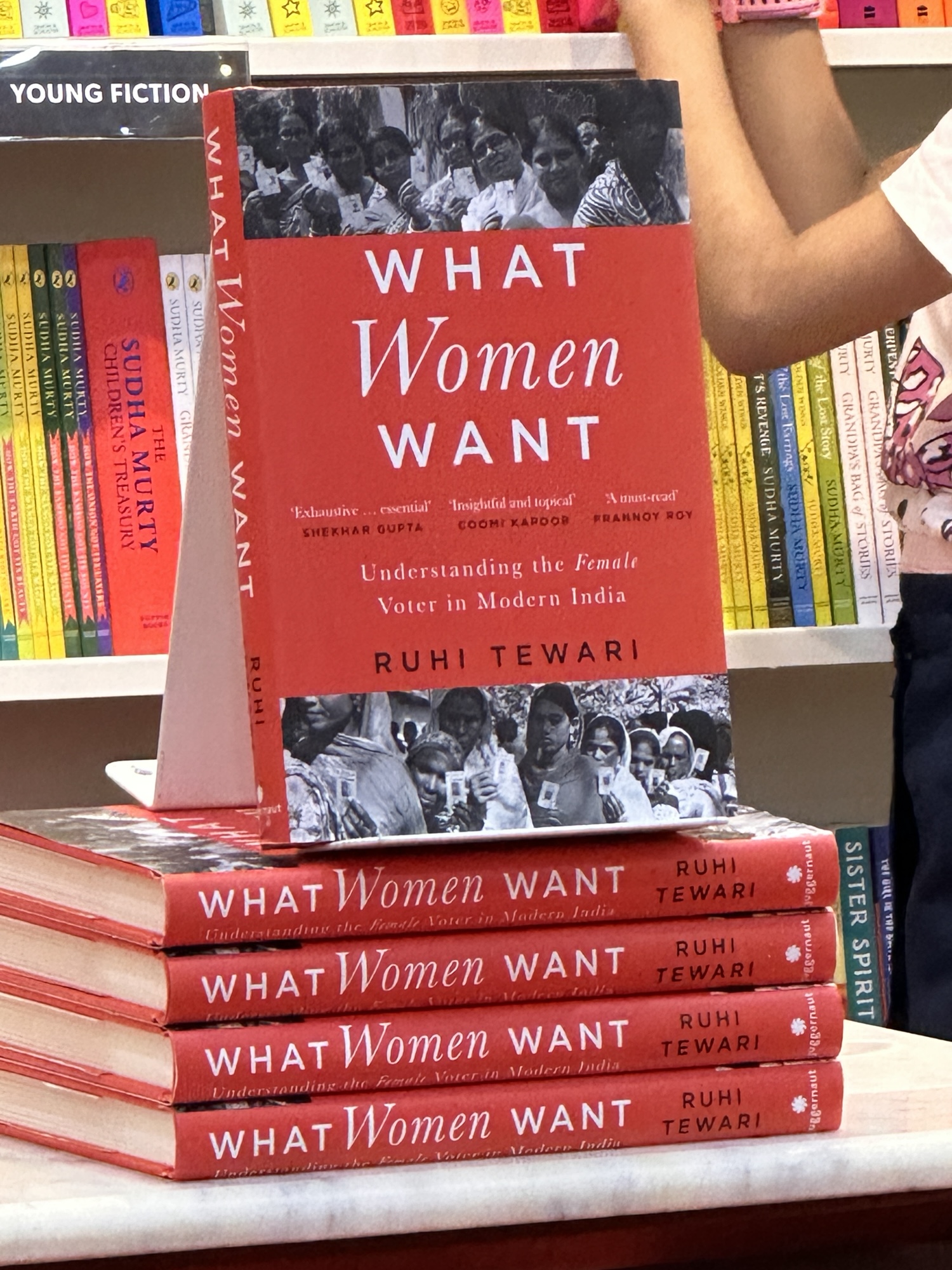
For full event details and a look at the venue, read our companion piece on the Pune Book Launch Event at Crossword Viman Nagar.
Ruhi Tewari on the Inspiration Behind the Book
Speaking about the spark that led to the book, author Ruhi Tewari shared a pivotal moment from a 2017 field visit to a girls’ college in Uttar Pradesh during the state assembly elections. What was originally scheduled as a brief, 15-minute chat about voting motivations quickly transformed into an intense, hour-long political debate. Every young woman in that classroom possessed fiercely independent, distinct political opinions.
Tewari noted that while societal barriers previously suppressed women’s political expressions, today’s female voters are acutely aware of their political leverage. However, she highlighted the unique challenge of documenting this demographic: balancing the unifying factors of the female electorate without oversimplifying the deep differences shaped by geography, class, and regional aspirations. Women are not a monolithic, predictable voting bank.
Tehseen Poonawalla Advocates for More Women in Politics
Adding a bold perspective to the event was well-known political analyst and media personality Tehseen Poonawalla. When asked about his take on the book’s central premise in an interview, Poonawalla flipped the narrative entirely away from male-dominated political expectations.
He stated bluntly that it is less about what women want and more about men understanding the need to elect more women into Parliament, state assemblies, and municipal corporations, asserting that women are far more competent at governance than men.
The Need for Safe Spaces in Local Governance
When questioned about how political parties can actively involve more women, Poonawalla emphasised structural safety over mere tokenism, calling for an immediate end to hostile political environments.
He also urged political frameworks to create genuinely safe environments, noting that a hostile atmosphere is a primary reason women stay out of politics. He argued that an influx of female leaders is crucial because women bring essential empathy, a feminist perspective, and a constructive mindset focused on building communities rather than creating division, drawing a sharp contrast against combative male leadership seen globally.
Why the Discussion Matters for Pune
The remarks shared by the speakers strike a major chord locally. As Pune navigates its own municipal corporation dynamics, the demand for genuine, independent female leadership is rising. Beyond mandatory seat reservations, the real challenge highlighted by both speakers is creating an ecosystem where female leaders can operate safely and independently, without being overshadowed by male political networks.
Ruhi Tewari’s “What Women Want” serves as a timely warning to mainstream political parties: treating women as a passive, predictable voting bloc is a mistake. The modern Indian woman knows her power—and she is ready to wield it.
What are your thoughts on the discussion? Do you agree that local municipal bodies need to create a safer environment to encourage more female leaders? Let us know your thoughts in the comments section below!